
Over the last several years, retailers have gotten the message that consumers are looking for more natural products that are more environmentally friendly. While it’s encouraging that consumers can get through to large corporations, are they really doing enough to meet our demands? For a company to really make a big impact – whether that is reducing chemicals, packaging, manufacturing emissions, transportations, etc. – it requires a huge overhaul of their operations, which can mean big bucks. Enter – greenwashing. This is when a company will throw a bunch of eco images and messaging on a product, even if it’s not actually that environmentally friendly. Environmentalist Jay Westervelt coined the term way back in 1986 after his frustration with the hotel industry. It’s a quick fix to make a quick buck, at the expense of the planet and their consumers. Not cool. Business Pundit has a great article about some of the top greenwashed products such as laundry detergent, coal, meat, cereal, hotels – it seems there are no industries that haven’t tried this sneaky advertising trick.
When someone is starting out on a journey to live in a more sustainable way, it can be really confusing to know what the right thing to do is. I’ll admit that I fell victim to greenwashing messages. And I had a lot of what I call half ass eco swaps – changes were a step in the right direction, but didn’t go as far as I would have liked in reducing my impact. I’ll outline a few examples in hopes that it will help more people look more critically at the changes they are considering.
My intention here is not to nitpick; I believe that if people are starting to pay attention to their habits and make changes, we need to be really supportive and not criticize. But we should all work together to share best practices and tips for how to make lasting, impactful changes that are going to make ourselves healthier and reduce the impact on the planet. It’s not always as simple as:
- Buy so-called eco product
- Rejoice, the planet is saved because of your purchase!
Here are a few half ass eco examples to watch out for:
“Eco” or “Natural” products packaged in plastic
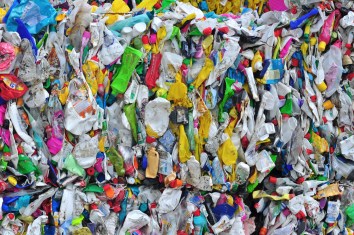 This is a big one. There are lots of companies out there who are making real strides in reducing their use of chemicals in their products, but are still utilizing plastic in their packaging. One step forward, one step back.
Some background – There is some real nasty stuff in the products we use in our homes. Companies are required to disclose their ingredients, but there is a huge loophole for fragrances. Companies are allowed by the FDA to simply list “fragrance” because it is considered proprietary. So they can put whatever chemicals they’d like in their fragrance and keep it completely hidden. Some chemicals that can be found include BPA, phthalates, endocrine disruptors, arsenic, mercury and lead.
So when companies are completely up front about all of their ingredients and don’t use any harmful substances, I truly applaud this effort. Companies like Seventh Generation are a leader in this space. For example – when comparing their dishwashing soap to Dawn’s Apple Blossom soap on the Think Dirty app which rates the safety of household and beauty products, Dawn received an 8 out of 10 (10 meaning that the product has potentially serious negative long term health effects) for containing unknown fragrances and triclosan which was banned by the FDA. In contrast, Seventh Generations Free & Clear dish soap rates a 1 out of 10, meaning it does not contain any known harmful ingredients. This is great! However, this product as well as the majority of Seventh Generation products, are packaged is plastic. While the plastic is recyclable, we need to start being careful about how we think about recycling.
There are serious flaws in how we recycle. China recently stopped receiving our recycling, and we don’t always have the infrastructure in the United States to process it ourselves. Nor is there always a market for recycled materials. Some municipalities have even cancelled their recycling program because it was too expensive to maintain.
So – reducing chemicals and providing transparency is great and a step in the right direction, but packaging items in plastic is just not good enough. Recycled plastic = landfill waste in many cases.
Solutions:
- Look for larger bottles of dishwashing soap that can be used to refill existing bottles.
- Check out bulk stores in your area that offer dish soap that you can put in one of your own containers
- Check out subscription models like:
- Fillaree (my favorite!)
- Refill Revolution
Pro tip – have a little bowl by your sink, put 2-3 squirts of dish soap in it and a few tablespoons of water to dilute it. Put your brush in it and swish it around to make it bubbly. Use this to use your dishes to minimize the amount of soap that you need.
For other items packaged in plastic like toiletries and makeup, here are a few ideas:
- Use a shampoo bar instead of plastic packaged liquid shampoo
- Use bar soap instead of liquid hand soap, or buy a large container and fill a reusable dispenser
- Check out companies like Elate for makeup packaged in reusable bamboo containers
- Research other toiletry companies who are using sustainable packaging
Disposable cups & plates
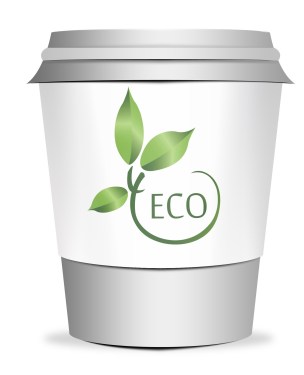 This may be my least favorite version of greenwashing. Staples has a whole page of “eco friendly” products with names like “Eco Products,” “Sustainable Earth,” and “EcoSmart.” They also all have a variation of green leaves floating across the products to give the illusion that they are eco friendly. To their credit, these products are made with some eco friendly materials such as corn or recycled paper, and many of them are compostable. However, many companies are getting rid of their reusable mugs, plates, cups and utensils in favor of these disposable options. And we don’t have widespread composting pickup in many municipalities in the United States. So using a compostable cup that is going to go in the trash doesn’t do one bit of good! It can take over a century to break down in a landfill, instead of two months in an industrial composting facility as intended. Another complication is that if a plastic looking compostable cup gets mixed in with recycling, it can contaminate the recycling process and the lot will be sent to the landfill. Think about it – what if a manufacturer was using recycled plastic to make chairs, if bioplastics got mixed in they could compromise the integrity of the materials and potentially hurt consumers.
Because of the clever naming and labeling, companies and individuals feel good about the switch they are making to seemingly eco friendly choices when they shouldn’t. Even if composting is available and people are very careful about avoiding contamination, it still takes resources to make that cup and compost it. Reusing a cup or fork is going to be much less effort overall and just takes a little bit of water and soap to clean between uses.
Grass fed beef
 As an individual, eating red meat is the single worst thing you can do for the environment. Cows require a lot and food and water, they need to be transported to slaughter, and they emit methane from their burps and farts. Why is this so bad? Lots of land, including the Amazon rainforest, is being cleared to give cows room to graze. And methane is 84 times more potent than carbon dioxide due to its ability to absorb heat.
Over the past few years, there has been a shift in preference to grass-fed beef over grain fed. It is true that there are more vitamins in grass-fed beef and they are less likely to “contain superbugs – bacteria that have become resistant to three or more classes of antibiotic.” However, it’s still very unhealthy! Grass-fed beef can still contain antibiotics and hormones, and has been linked to a number of deadly health issues such as cancer, premature aging, heart attack, stroke and death.
From an environmental standpoint, grass-fed is even worse than grain fed! Grain-fed cows are fattened up quicker and sent to be “processed” (don’t get me started on this euphemism) as early as 12-13 months old, whereas a grass-fed cow requires up to 24 months. That’s a year longer that they are eating food, drinking water and emitting methane.
For more info on this topic, here is a great article.
Organic feminine products
There has recently been more attention on the chemicals that are in feminie products like tampons and sanitary pads, which has given rise to “organic” options from companies like Lola, Seventh Generation and the Honest Company. But there are reports that the public backlash might be unfounded and the chemical exposure is minimal.
And is switching to an organic option really doing anything for the environment? Let’s do some basic math:
- The average woman menstruates from approximately age 13 to 53, which means they’ll have 480 menstrual cycles.
- Each menstrual cycle lasts approximately 5 days, which means they’ll menstruate on 2,400 days.
- If a woman uses a tampon during her period and changes it every 6 hours, she’ll use 9,600 tampons over her lifetime.
This math does not account for the use of a sanitary pad in addition to a tampon, or if a period lasts for up to 7 days. Many women flush tampons, which can wreak havoc in sewers and waterways. The alternative is being sent to a landfill, where they are slow to break down.
 Pads aren’t so innocent either. Bustle reports that “up to 90 percent of the materials in pads themselves and their packaging are plastics that aren’t recyclable. It’s been calculated that the environmental impact of one pad is the same as four plastic bags, largely because of the problem of polyethelene, which is notoriously difficult to break down.” And this also doesn’t account for the packaging of these items – plastic wrappers, plastic or cardboard applicators, boxes, etc.
So what’s the solution? Aren’t these items necessary to help women maintain their dignity, hygiene and health? No! Here are my favorite options:
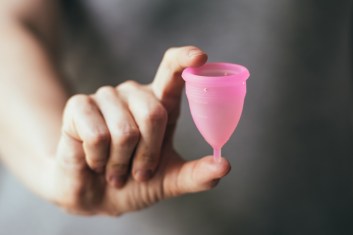
- Menstrual cups – These are soft silicone cups that can be inserted and collect blood. They need to be emptied once in the morning and once at night (depending on blood flow), rinsed with water and soap. After the period ends, they need to be washed and boiled for 10 minutes to sanitize them. Truthfully, they take some getting used to and I recommend staying close to home the first day or two that you use them to get used to it. I switched over a year ago and have been really happy. They are much more comfortable, require less maintenance and are cheaper. I spent about $15 on mine, which is less than what I spent per month on my monthly Lola delivery.
- Absorbent underwear – There have been a few companies to come out recently with period proof underwear (my favorite is Thinx). I honestly have no idea how it works, but they are amazing. I have two pairs and will wear them for the first few days of my period as backup. They have cute styles, are leak proof and easy to clean. They aren’t super cheap, but one or two pairs will end up being cheaper than buying pads in just a few months.
Buying sustainably made items you don’t need
There are some beautiful items being made by retailers that are touted as “eco friendly” and “sustainable.” Whether its vegan sneakers made of corn,stylish flats made of recycled water bottles or sustainably sourced furniture, these options are amazing and signify a major shift in various industries to examine their manufacturing processes to be more sustainable. However, there is NOTHING less sustainable than buying an eco friendly item for the hell of it. If you really need a winter coat, by all means check out the Renew collection from Everlane made from recycled water bottles vs. a traditional coat stuffed with goose down. But if you have a perfectly good coat, keep using it! Or explore shopping secondhand instead of buying new.
Hopefully this has been helpful at peeling back the layers of greenwashing tactics that companies use. If you have any questions or comments, please let me know!
 eco chick
this is one of the best articles I have read on this issue, keep up the good work
LikeLike
thank you my dear!!
LikeLike