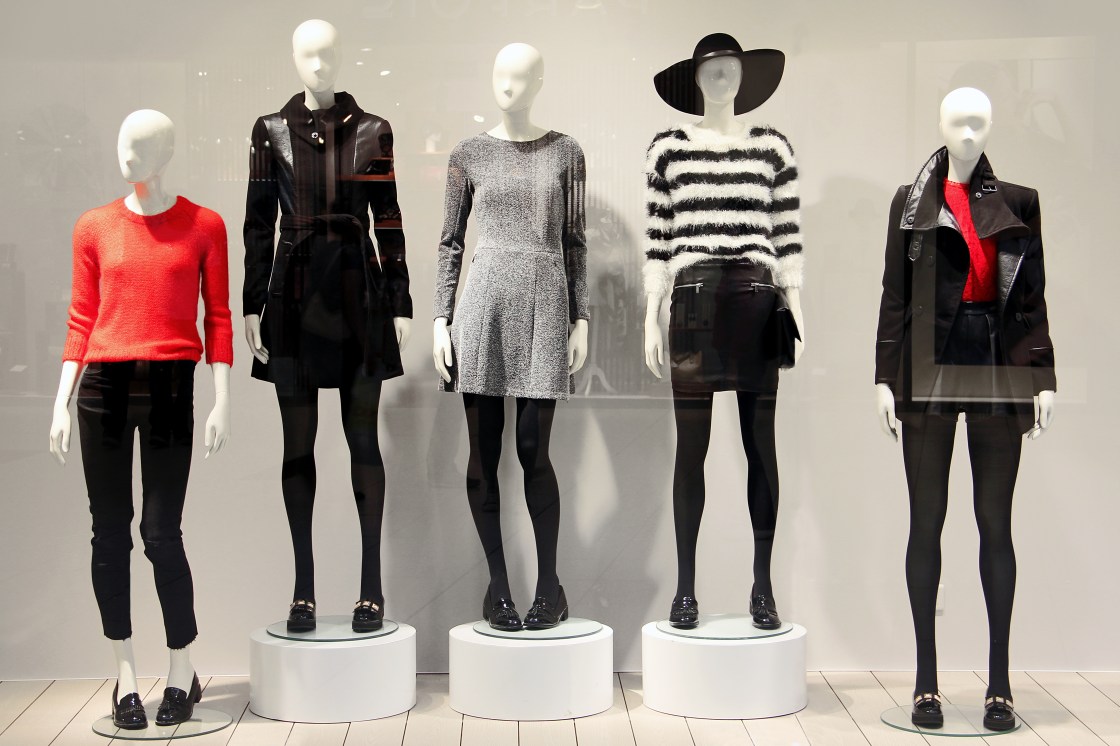
I’m not trying to be a creep, I actually really want to know what you’re wearing. And you should want to know too. Where did your outfit come from? Who made it?
When I think about trying to live more sustainably, sometimes I feel like I’ve just taken the red pill and woken up from the matrix. It is so easy to go with the flow and live our lives, seemingly unaware of the impact we are having on the world and other people. This applies even to the choices we make for where to shop and what to wear.
I’m ashamed to describe what my behavior used to be like when it came to clothes. For the past 15+ years my wardrobe has been very important to me and I’ve been very budget conscious. I shopped at TJ Maxx, Old Navy, H&M and Forever 21 and trolled more expensive stores like Banana Republic and J. Crew for sales. Shopping in this way allowed me to not spend a fortune, but still stay on top of trends. I prided myself on being a great bargain hunter. I had a tradition every Sunday of picking out all my outfits for the week, down to what necklace and shoes I would wear each day. I convinced myself that this was practical so I didn’t have to rush around in the morning, but if I’m honest, I did this so I could dedicate enough time to making sure I was always wearing a perfect outfit.
Since becoming a mother last year and working from home more often, my priorities and clothing have certainly changed. I no longer care (or have time) to spend hours crafting the perfect outfit. But even so, my consumption has not decreased all that much – I bought new maternity clothes for various stages of pregnancy, flowy tops and stretchy jeans for the awkward postpartum period, and recently treated myself to new clothes as a reward for getting down to my pre-pregnancy weight. And not to mention – this whole time I was buying tons of baby clothes! My son rarely goes a whole day without at least one or two outfit changes because of spills or a diaper blowout, and he grows out of clothes in a matter of months. And with all the clothes from loved ones, he has quite the extensive wardrobe.
Now, there is nothing inherently wrong with wanting to present yourself in the best way possible. And clothing is incredibly powerful tool to do so. But my eyes have truly been opened after watching the True Cost movie, which talks about the ugly truth behind the clothes we wear every day – pollution and human rights violations.
So seriously – look at the clothes you are wearing right now to see where they are from. Mine are from Mexico, Vietnam, China and India. Human hands helped create these clothes. Chances are, it was a woman below the poverty line in a developing country. Her life is likely very different from mine, for example, she might not enjoy a living wage and safe work environments like I do. I would be embarrassed for her to see how frivolous I have been with the clothes she has worked so hard to make.
Unfortunately, there are many others who have shopped the way I have. Today, “fast fashion” is the norm. Brands like Zara and H&M have pioneered this way of shopping with up to 50 micro seasons and new styles always arriving in stores. Clothes are incredibly fashionable, and very affordable. However the quality is poor, and any semblance of being environmentally friendly or socially conscious is a joke. These brands have learned to outsource their production and totally disregard their supply chain management in the name of quarterly profits and speed to market.
The countries where fast fashion clothes are produced are often desperate for the business. So much so, that they often overlook building codes and labor laws to secure work. In 2013, there was a building collapse in Bangladesh that killed 1,100 people. This factory was producing low cost clothing for Wal-Mart, The Children’s Place and J.C. Penny. Managers had been warned about the structural risks, and those warnings were ignored. The fashion industry is estimated to be a 3 trillion dollar industry – so why are very little of those profits going toward helping to protecting the rights of the 40 million garment workers? In a fast fashion economy, the clothing companies enjoy high margins, consumers enjoy dirt cheap prices, but the garment workers pay the price. A recent news story details garment workers from Zara that were so desperate to be paid for their work, that they sewed desperate pleas into the clothing hoping that the consumers would help advocate for them.
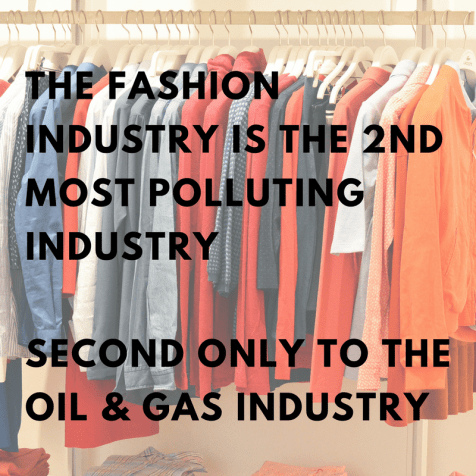
In addition to the impact this has on garment workers, there are detrimental impacts to our environment. Resources are needed to grow cotton and other materials, chemicals are used to dye and treat the fabric, power is needed for production, and materials are needed for packing and shipping. Throughout the process, raw materials and clothing come into contact with many chemicals, which have been shown to have detrimental impacts on the local environment and population. More information can be found here.
I used to think that donating my clothes was a reasonable option, so that someone else could benefit from clothes I had moved on from. But according to the EPA, the US produced 15.1 million tons of textile waste in 2013, and around 85 percent of that ended up in landfills. The bottom line is we are simply producing too many clothes.
So – where does that leave us? It’s easy to feel like you are just one person, so does it really matter if you pop into Old Navy to pick up something for this weekend? It does, and we need to start somewhere to break this cycle. I am just starting down this path, but here are some guidelines that I am trying to live by:
Less is more
Ever feel like you have a closet packed full of clothes, but nothing to wear? You might think that the answer is to buy more clothes, but it’s actually the opposite.
In researching this post, I asked (forced) my mom to watch the True Cost movie with me. She was so disheartened by footage of children that have been adversely affected by chemical exposure in areas that produce clothes, that she started rethinking a recent purchase at Talbots. She ended up returning everything, and making do with what she had. She experimented with putting different items in her closet together in ways she hadn’t considered before, and as a result, received several comments that day. I was so happy to hear that. A little creativity goes really far.
Quality over quantity, and trends be damned
Just because you’re making do with less, doesn’t mean you’ll never buy new clothes. Make those fewer pieces in your wardrobe really count. In the past I would have no problem spending hundreds on clothes as long as I was getting several items. The thought of spending more on just one item seemed like too much of a commitment. But investing in classic, well-made items truly is worth it. Think blazers, high quality jeans, boots, purses, etc. Spending more on these items and caring for them will ensure that they will be staples in your wardrobe for years to come.
Having fewer pieces may mean you have to forego some trends. This is a tough one for me. While I no longer read fashion magazines and try to stay on top of all trends, I must admit that I’ve been obsessed with my black slip ons from Vans that are everywhere these days. What I suggest is to choose wisely – don’t feel like you need to stay on top of all trends, which prompts constant purchases of new, low quality items. Figure out which trends speak to you, pick one or two, and try to find those items secondhand or from ethical vendors.
Ask questions
Knowing about the terrible working conditions in which our clothes were made would probably make us rethink buying them, right? An experiment by the Fashion Revolution confirmed this in 2015. They set up a vending machine selling 2 Euro shirts, but before you could purchase it told you the story of an underpaid garment worker. Of course, everyone decided to donate the 2 Euros instead of buy the shirt.
So – ask questions about where your clothes came from. And be skeptical. I recently did some research on my beloved Vans to see if they were made ethically. I found a beautiful and optimistic consumer report detailing their emphasis on fair labor and their comprehensive factory auditing process. I must admit; they had me fooled for a few minutes. However, I came across several other sites rating Vans as an “F” or urging consumers to boycott their products. So how can a company that brags about its high standards and thorough auditing actually be one that we should avoid? Most companies outsource their production to middlemen who have grown into megasuppliers, who sub contract out most of the production. It can be challenging or even impossible for companies to really know where their goods are being produced. And factories have also gotten good at skirting regulatory rules, and we are producing such high volumes of clothing that auditors simply cannot keep up.
Who can we believe when trying to purchase ethically made clothes? Look for companies that have total transparency into their facilities and the manufacturing process. One of my favorites is Brass – which not only shows you where and how their clothes are made, but they promote building a smaller wardrobe of high quality pieces and even use real women of all shapes and sizes as their models. A favorite for jewelry and purses is American Nomad, which seeks to treat people with compassion, preserve the planet, and celebrate the local cultures of their suppliers. Some great resources for finding other ethically made brands can be found on The Peahen and Project Just.
Consider secondhand
Buying clothes secondhand is something I never really considered until a few months ago. I assumed that the clothes were poor quality, and there was just an ickiness associated with pre-owned clothes. Then I discovered Poshmark. I had dabbled in consignment once before, and didn’t have a great experience. I dropped off an armload of clothes to a consignment store in a high end Boston suburb…and never heard from them again. They could have sold all of my clothes and I would have never known. Poshmark is different – it’s an app and you manage your sales and purchases yourself. I began by selecting clothes of mine that were still in good shape but that I never wore anymore. You upload a description, set a price and people can bid on the clothes. After about a year, I’ve made over $500. I’ve also begun buying clothes from Poshmark, including the majority of my son’s clothes. And you can apply credits from sales to purchases, so I have yet to spend a dollar despite purchasing several items ($45 J. Crew schoolboy blazer – yes please!).
Here’s the thing – the system isn’t perfect. Even though I try to reuse shipping materials, there is still waste generated from boxes, envelopes, tape, etc. Poshmark is a great tool for making sure that unwanted clothing finds a new life with a new owner, but just be mindful of waste. And don’t limit your secondhand shopping to online stores – check out vintage or secondhand stores in your area for the same great deals but with zero waste.
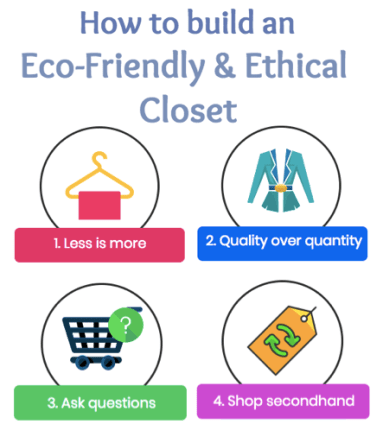
In addition to these four steps, there is actually one more bonus step – start talking about this. Ask your friends to watch the True Cost movie with you, talk your favorite clothing store where they make their clothes, ask around to see if there are any good secondhand stores in your area. Changing the fast fashion industry isn’t going to happen overnight. But each item we purchase is a vote, and if we can get a people in our communities to start voting for sustainability and ethical practices, we can make a difference.
 eco chick
I just finished Overdressed because I wanted to learn more about this topic & I highly recommend! I am really trying to prioritize quality purchases and buying second hand
from Poshmark. I also have dreams now of buying a sewing machine, but that may be a bit too ambitious 🙂
LikeLike
Oooh, thanks for the reco! And I hear you on the sewing machine – I so would love to be able to sew, not so much to sew my own clothes but to repair items. Maybe one day!
LikeLike