
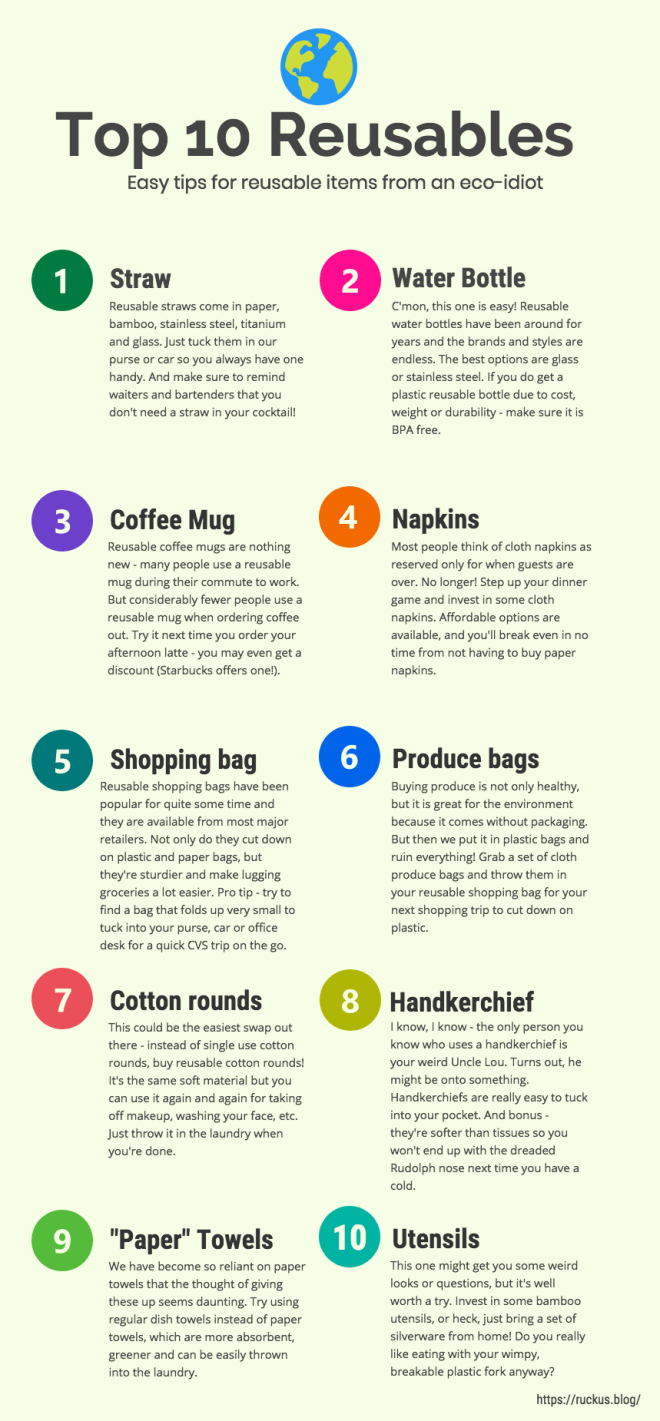
Trying to minimize waste doesn’t have to be a daunting task. I’ve put together an easy list of 10 reusable items to start using that will help jump start being more environmentally friendly. As I was putting this list together, I realized that most people probably own many of these items already, but probably aren’t using them. Check out the list below and try to commit to switching to one or two of the items below.
1. Straws –Last week we talked about why reusable straws are the coolest. The hardest part of using reusable straws is actually preventing someone from giving you a plastic straw in the first place! I went to the gym yesterday for the first time in ages, and decided to reward myself afterward with a smoothie. I saw a large container of plastic straws near where you pick up your drink, so I assumed they didn’t hand you a straw. I was wrong, and watched helplessly as I saw the straw get plunged into my drink as if it were in slow motion – “Nooooooo!” Lesson learned – incorporate “no straw” into your drink order. For example – “medium cold brew, with room, no straw.” Easy peasy.
2. Water bottle – This is nothing new, right guys? Then why do you still use a plastic 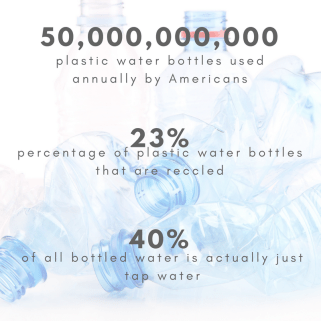 water bottle? Because it’s so damn convenient. Water bottles are seemingly everywhere, it’s no wonder Americans use more than 50 billion plastic water bottles a year. And the sad thing is, only 23% of those are recycled. Reusable water bottles are not hard to find, and they come in a variety of styles and materials. Pick one that fits your needs – whether you want a small one to fit in your purse, a sporty one to take to the gym, or a super trendy one to show people how stylish you are – no judgment! Most people know enough to stay away from plastic that contains BPA, but there are also mixed reviews on BPA-free plastics and whether or not they are safe. Stainless steel or glass options are more eco-friendly and healthier, so it’s a win-win. And for those that say that they drink bottled water because it is cleaner than tap – think again. 40% of all bottled water is actually just tap water, although it goes through less rigorous testing than what comes out of your faucet. Gross.
3. Coffee mug – Reusable coffee mugs also fall in the “been there, done that” category. We all probably have some taking up space in our cabinets, but how often do we actually bring them when we order coffee? Probably never. I was always diligent about recycling my Starbucks coffee cups, without realizing that they are lined with plastic, which makes them not recyclable. What?! And not only are these single use coffee cups hurting the environment, but there are some pretty severe consequences for our own health. For more reasons NOT to get disposable coffee cups, read this article. Carcinogens leaching from Styrofoam? Hard pass.
4. Napkins – While there are currently debates about the environmental impact of paper napkins vs. cloth napkins, the cloth napkin is the clear winner – especially when it is made of organic cotton, flax or linen. It does need water to be washed, but if you throw it in with an existing load of laundry that you would do anyway it’s not adding any additional strain on the environment. If you really can’t deal with cloth napkins or think they are too fancy for you, at least consider buying paper napkins that are made from recycled materials and that are not bleached – meaning they require fewer chemicals to produce. Then after using, throw them in your compost for extra points.
5. Shopping bag – About 10 years ago, I worked in marketing at TJX, which is the headquarters for TJ Maxx, Marshalls and HomeGoods. I remember working on a project to help design reusable shopping bags, which were just beginning to be very popular at the time. Nowadays, they are unavoidable. My own current inventory includes bags from local grocery stores, Lululemon, TJ Maxx and a funeral home in a neighboring town – not sure how that one got there. We made the switch to religiously using reusable bags several years ago. Living in the city and on the second floor, we quickly learned that reusable bags are stronger and make lugging groceries much easier. I’ve also invested in a few smaller bags that can be easily folded up and stuffed in my purse for when I need to pick something up unexpectedly. One of these smaller bags is from the Gap, and when you bring it shopping with you, you’ll get 10% off at the Gap. If that isn’t a reason to carry a reusable bag with you, I can’t help you. Now if you are caught at the store without your bag, please ask for paper instead of plastic!
6. Produce bags – A farmers market or the produce section of your grocery store are the best and easiest places to buy food that is fresh and doesn’t contain any packaging. But then why are there plastic bags all over the place? A few years ago I stopped using these plastic produce bags and just started throwing things directly into my cart. But then there are certain kinds of produce (cucumber, carrots, celery, broccoli, etc.) that I think go bad pretty quickly in the fridge if they aren’t in a plastic bag. My solution was to use cloth bags

7. Cotton balls – At first I thought this one was pretty silly – cotton balls are so tiny! But I use a few every day for taking off makeup, washing my face and my son’s face – and it all adds up. Not only is this a needless waste of cotton, but cotton balls/rounds are always sold in plastic packaging which can’t be recycled. I recently invested in reusable cotton rounds, which come in bright colors and can easily be thrown into the wash (put them in a delicates bag). Seriously one of the easiest swaps ever. For those that are more domestically inclined, here are some tips for sewing your own.
8. Handkerchief – I know, I know, this might be a tough one. My Dad is the only person I know who has always used a handkerchief, and truthfully I always thought it was a little gross (sorry, Dad!). Isn’t it a lot cleaner to just use tissues? Obviously a lot of people think so, as over 255 billion facial tissues are used in the US each year. As someone with a perpetually runny nose, I always have a number of tissues on me. My husband makes fun of how many crumpled up tissues live in the pockets of all my jackets. Even worse, I would frequently buy the small packs of tissues wrapped in plastic to take on the go. A few months ago I wised up to my trashy ways and started using a handkerchief – with mixed results. I was using a cloth napkin, which was a little bit too bulky, so I was kind of embarrassed to use it in public. However I recently found these cloths, which are so soft and comfortable. And there are enough in the package so that you can use a fresh one each day. The best part is that they actually look like a tissue, so you don’t need to worry about looking conspicuous.
9. Paper towels – In the US, a whopping 13 billion pounds of paper towels are used each year. My family used to rely on paper towels for everything – wiping down counters, drying baby bottles, makeshift napkins or tissues, drying hands, etc. A few months ago I got these towels
10. Utensils – There is a reason why this one is #10, it is not for the faint of heart. However, it is a change that is definitely worthy of your consideration. Over 6 million tons of non-durable plastics (such as spoons, forks and knives) get thrown out every year, contributing to not only filling landfills but also polluting the ocean. Single use plastics take tons of time and resources to produce and they don’t break down for hundreds of years – but they probably only get used for 20 minutes! So not worth it. Not to mention, they could be laden with BPA, which you are then putting in your mouth. And let’s call a spade a spade – plastic silverware doesn’t even work well! Forks break, knives can’t actually cut through anything. Why are we so enamored with this stuff? A month ago I picked up a set of ToGoWare
So that’s it! All totally manageable changes that will make a big difference. I would love to hear from you – are you willing to do any of these, any of them gross you out, did I miss anything? Let me know!
Sources:
https://www.banthebottle.net/bottled-water-facts/
http://greengroundswell.com/paper-facial-tissue-history-and-environmental-impact/2013/12/05/
http://www.thepaperlessproject.com/how-to-reduce-your-paper-towel-use/
http://www.onegreenplanet.org/environment/how-you-can-stop-single-use-plastic-waste/
http://www.care2.com/causes/tap-water-is-cleaner-than-bottled-water-and-other-shocking-facts.html
Melissa is a participant in the Amazon Services LLC Associates Program, an affiliate advertising program designed to provide a means for sites to earn advertising fees by advertising and linking to Amazon.com.
 eco chick
One Comment